
Richland Probate Lawyers
Richland Probate AttorneyS Serving Benton County
After a loved one passes away in Richland, your family may need to settle their estate through the probate process, in which the court accepts your loved one’s Will and appoints the executor to administer the estate. The executor then collects and distributes the deceased’s assets. Contact ELG Estate Planning for an initial consultation with a knowledgeable probate attorney to learn more about the estate administration process in Richland to learn about the probate process.
Why Choose a Probate Attorney from ELG Estate Planning?
After a loved one has passed away, and if you have been nominated as the executor or personal representative, you have the responsibility of administering the estate and probate may be required. Even if there is no probate, and you are the successor trustee of a Revocable Living Trust, legal guidance may be needed. Turn to a Revocable Living Trust attorney from ELG Estate Planning for experienced legal guidance on administering estates through probate or trusts because:
- We are one of the leading firms in the Tri-Cities area for assisting families with probate and estate administration.
- Our firm exclusively handles estate planning, elder law and estate administration matters, providing in-depth knowledge and insights and tailored legal solutions to the administrative challenges our clients may face.
- Our attorneys will provide your family with the capable and compassionate support you need after losing a loved one. We are dedicated to alleviating the stress of the probate or trust administrative process so you can focus on grieving and healing.
Understanding the Probate Process in Richland
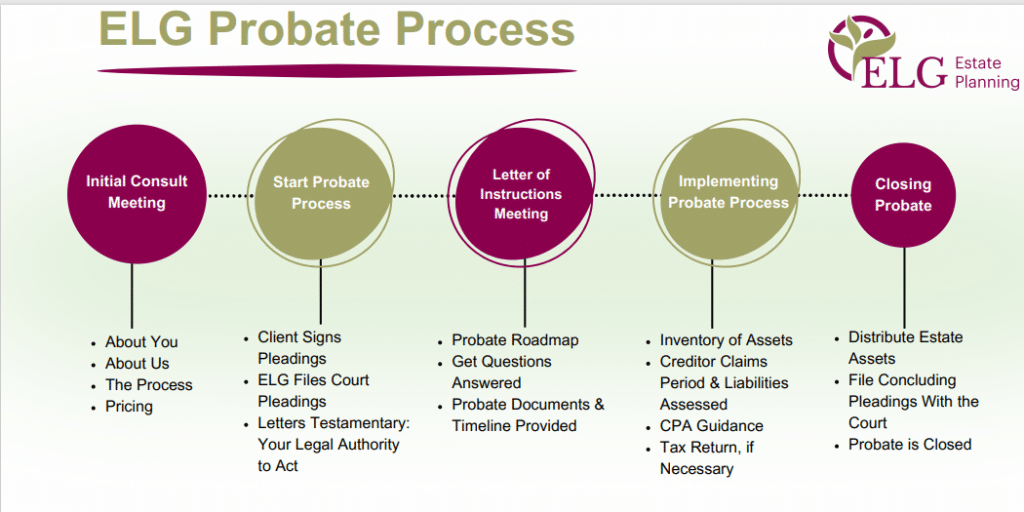
The probate process in Richland begins when a person – usually the individual named as the executor by the decedent’s Will or another family member of the decedent if there is no Will – files a petition with the court in the county where the decedent lived. This petition asks the court to appoint the petitioner as the executor or administrator of the decedent’s estate – the individual responsible for managing the estate administration process – and to admit the decedent’s Will (if the decedent left one).
After the court appoints an executor or administrator (personal representative), they must send notice of their appointment to interested parties, including beneficiaries named in the decedent’s Will and the decedent’s surviving next of kin, also known as heirs-at-law. Giving notice to interested parties allows them to file a Will contest or to challenge the personal representative’s appointment. The personal representative also should notify the decedent’s creditors by sending notices to known creditors and publishing notices in local or regional newspapers to allow them to file claims against the estate to recover debts the decedent owes.
The personal representative begins administering the estate by gathering, inventorying, and valuing the decedent’s assets, such as real estate, investments, bank accounts, vehicles, and personal property. For some assets, the personal representative may need to hire professional appraisers to determine the asset’s value. Personal representatives must file an estate tax return with the Washington Department of Revenue and the Internal Revenue Service and pay any income or estate taxes due. The personal representative can also begin paying creditors who present claims against the estate for debts the decedent owed before their death.
After paying debts, taxes, and estate administration expenses (such as attorney/accountant/appraiser fees), the personal representative can begin distributing the remaining estate assets to the decedent’s beneficiaries as directed by the decedent’s Will or to their heirs under Washington’s intestate succession statutes if there is no Will. Once the personal representative has distributed all estate assets, they then close the estate through a declaration of completion. If any objections are filed, an accounting may be required and approved by the court. The personal representative is discharged from further duties.
Washington law also offers a simplified alternative to the full probate process for estates valued at $100,000 or less. Under this “small estate process,” the claiming beneficiary may file an affidavit with the court to receive the estate assets. The affidavit must state:
- The affiant’s standing to claim under the decedent’s estate
- The decedent’s Washington residency on the date of their death
- The value of the decedent’s estate (which cannot exceed $100,000)
- The date of the decedent’s death (at least 40 days must elapse)
- The lack of a pending or granted application/petition for the appointment of a personal representative in any jurisdiction
- The payment of all funeral and burial expenses for the decedent
- A description of the decedent’s personal property
- A confirmation of notice to all successors of the decedent
- That the affiant has the right to delivery of the property claimed
How Long Does Probate Take?
Although no one can predict how long a probate case can take, various factors will influence the timeline and duration of probate for a decedent’s estate, including:
- The value of the decedent’s estate
- The length of time it takes to locate the decedent’s Will or estate assets
- The type and complexity of the assets in the decedent’s estate (such as high-value real estate, significant investments/cryptocurrency holdings, or business ownership interests)
- Whether the decedent left a Will or whether the Will has potentially unenforceable provisions (such as naming an executor or beneficiary who has passed away)
- Whether an interested party contests the admission of the Will to probate or the appointment of an executor or administrator
- The volume and nature of creditor claims filed against the estate
- Whether any interested parties initiate legal disputes of the administrator’s/executor’s estate administration decisions
- Whether real property must be sold
- Whether a tax return must be filed for income and/or estate tax liability
Although probating smaller estates can be accomplished within a matter of months, complex estates can take much longer, especially if the estate must await approval of an estate tax return by the state. Oftentimes a partial distribution can be made while awaiting approval of the estate tax return as long as sufficient funds are kept in the estate to pay any tax liability.
How Can an Attorney Help You Navigate Probate?
Probating a loved one’s estate is challenging when facing the pain and grief of your loved one’s passing. An experienced and compassioned Richland probate lawyer from ELG Estate Planning can help you and your family by providing support and guidance through each step of probate to take the stress of the legal process off your shoulders. Let our firm assist you with administering a deceased loved one’s estate by:
- Reviewing your loved one’s Will and other estate planning documents
- Explaining what to expect during the probate process
- Assisting you with probating an estate with a lost Will
- Preparing the probate petition to admit your loved one’s Will to probate and appoint an executor or administrator
- Helping you gather and inventory assets in your loved one’s estate
- Advising you regarding your legal options for resolving estate administration disputes
- Assisting with resolving creditor claims and filing estate taxes
- Helping you distribute remaining assets to beneficiaries/heirs and closing the estate
Contact Our Firm Today for Seasoned Legal Guidance
When a loved one passes away and the court appoints you as the executor or administrator of their estate, a dedicated trusts and estates attorney from ELG Estate Planning can walk you through the probate process and help you discharge your fiduciary duties to the estate or trust. Contact us today for a confidential consultation to learn more about our estate administration legal services in Richland.